
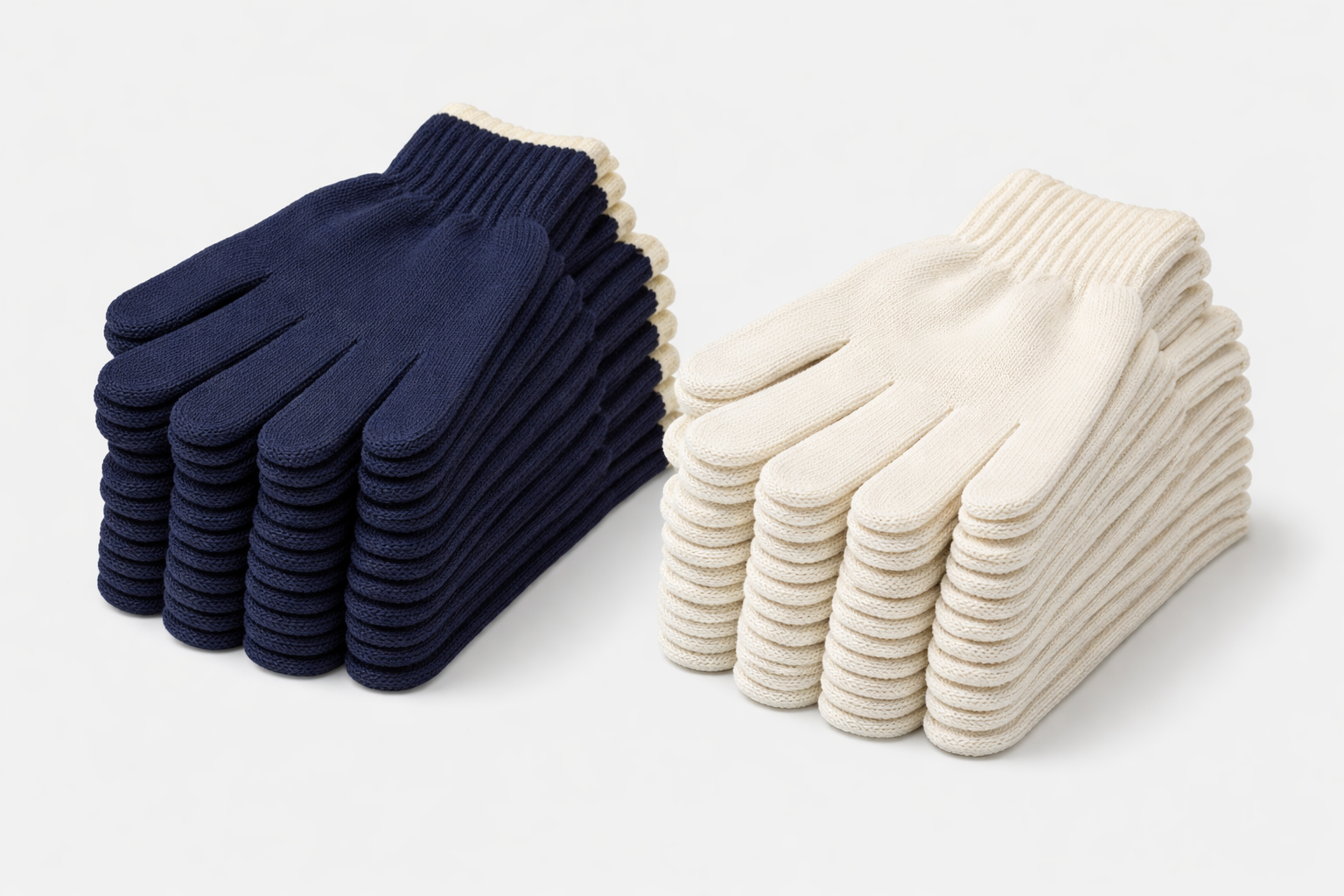
Cotton knitted gloves are among the most widely used industrial consumables across factories, warehouses, and logistics operations. They are used daily for handling, packing, loading, assembly, and general shop-floor activities.
One common question purchase managers and operations teams face is:
Should we use 40g cotton knitted gloves or 50g cotton knitted gloves?
While both may look similar at first glance, the difference in weight directly impacts durability, comfort, cost, and suitability for specific tasks. This guide explains the difference clearly so factories can make the right decision.
What Does 40g and 50g Mean in Cotton Knitted Gloves?
The “g” refers to the weight of a pair of gloves, measured in grams.
- 40g gloves → Lighter, thinner cotton knit
- 50g gloves → Heavier, thicker cotton knit
Higher weight generally means:
- More cotton yarn used
- Better durability
- Slightly higher cost per pair
However, heavier does not always mean better for every application.
40g Cotton Knitted Gloves – Best Use Cases
40g cotton knitted gloves are designed for light-duty, high-volume tasks.
Ideal for:
- Packing and sorting
- Light assembly work
- Warehouse picking
- Logistics and loading of lightweight materials
- Short-duration tasks
Key benefits:
- Lightweight and breathable
- Comfortable for long hours
- Lower cost per pair
- Suitable when gloves are replaced frequently
Limitations:
- Faster wear and tear
- Not suitable for rough handling or sharp edges
👉 Best choice when cost control and comfort are more important than extended durability.
50g Cotton Knitted Gloves – Best Use Cases
50g cotton knitted gloves offer better thickness and durability, making them suitable for more demanding tasks.
Ideal for:
- Material handling
- Loading and unloading
- Manufacturing shop floors
- Handling heavier components
- Longer shift usage
Key benefits:
- Better durability than 40g gloves
- Improved resistance to tearing
- Slightly better hand protection
- Longer usable life per pair
Limitations:
- Slightly higher cost
- Marginally less breathable than 40g
👉 Best choice when durability and performance matter more than minimal cost.
Cost Comparison: 40g vs 50g Gloves
Many factories focus only on the price per pair, but a better metric is cost per use.
- 40g gloves may be cheaper, but need replacement more often
- 50g gloves cost more per pair, but last longer
In many cases, factories find that 50g gloves reduce overall glove consumption, especially in handling-heavy operations.
Which Industries Should Choose Which?
| Industry Type | Recommended Gloves |
|---|---|
| Warehousing & Logistics | 40g or 50g (based on load) |
| Manufacturing Units | 50g |
| Assembly Lines | 40g |
| Packaging Units | 40g |
| Heavy Handling Operations | 50g |
Common Mistakes Factories Make When Choosing Gloves
- Selecting gloves based only on lowest price
- Using the same glove type across all departments
- Ignoring durability requirements of specific tasks
- Not evaluating replacement frequency
Choosing the right glove weight can significantly improve worker comfort, safety, and cost efficiency.
Final Recommendation
There is no single “best” option for every factory.
- Choose 40g cotton knitted gloves for light-duty, high-volume, short-use tasks
- Choose 50g cotton knitted gloves for heavier handling and longer usage
Many factories successfully use both variants, assigning them based on job role and department.
Looking for the Right Cotton Knitted Gloves?
At Viyara Industries, we supply cotton knitted gloves in 40g and 50g variants, suitable for factories and warehouses. Our focus is on consistent quality, dependable supply, and clear specifications—helping operations teams choose what works best for their needs.
👉 Contact us to discuss your glove requirements.