
Maintaining clean and hygienic floors is a daily requirement for factories, warehouses, and industrial facilities. Two products commonly used for this purpose are floor cleaner and phenyl. While both are used for cleaning floors, they serve different purposes and choosing the wrong one can lead to unnecessary costs, improper hygiene, or inefficient cleaning.
This guide explains the difference between floor cleaner and phenyl in simple terms, helping factories choose the right product based on actual operational needs.
What Is a Floor Cleaner?
A floor cleaner is primarily designed to remove dirt, grease, oil, and stains from floors. It focuses on cleaning performance rather than disinfection.
Key characteristics:
- Removes dust, grime, grease, and industrial dirt
- Suitable for daily floor cleaning
- Available in concentrated form for dilution
- Leaves floors visually clean and fresh
Common usage areas:
- Factory shop floors
- Warehouses and logistics areas
- Production zones
- Parking and loading areas
Floor cleaners are ideal where cleanliness and appearance are the main requirements.
What Is Phenyl?
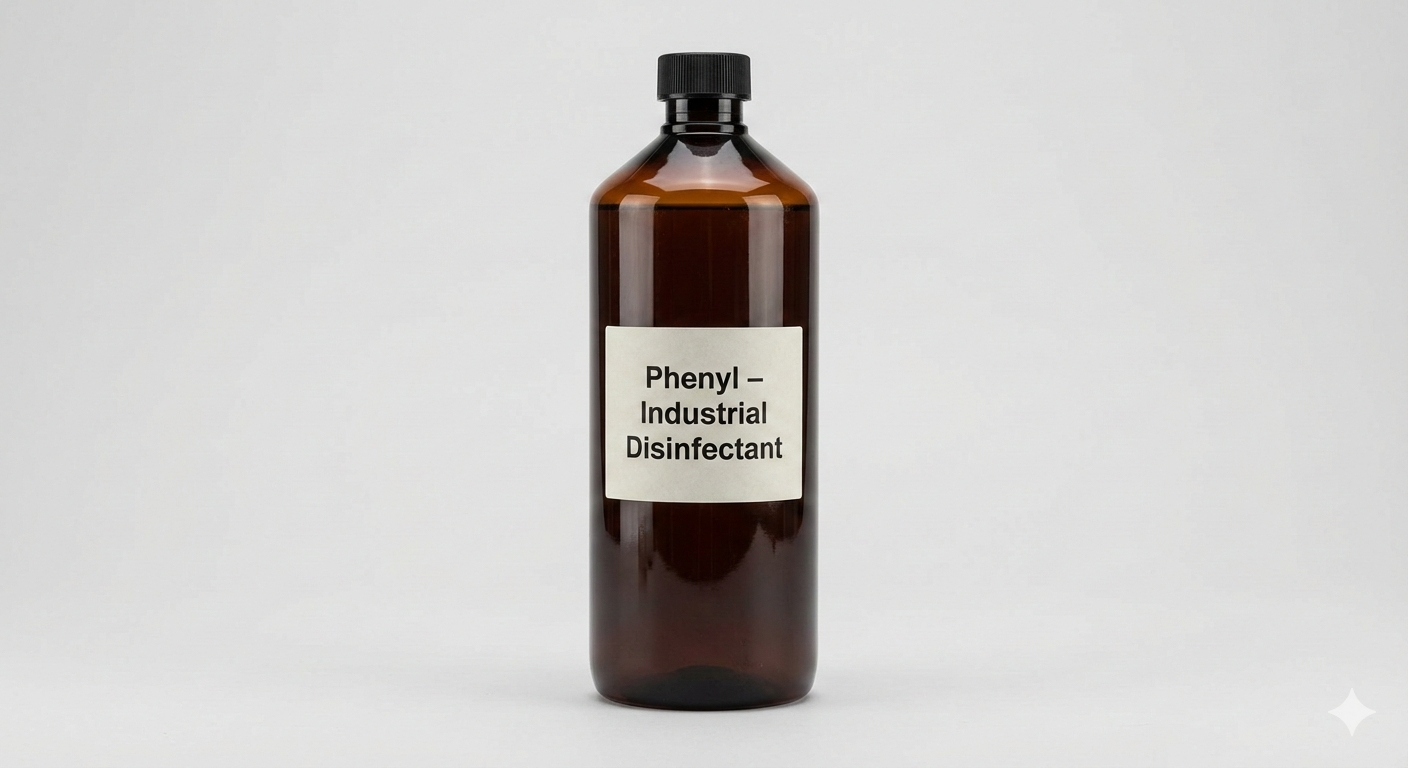
Phenyl is a disinfectant that focuses on killing germs and bacteria. It provides sanitation along with a strong, long-lasting fragrance.
Key characteristics:
- Disinfects floors by killing germs
- Strong smell, usually pine or medicinal fragrance
- Used more for hygiene than dirt removal
- Also supplied in concentrated form
Common usage areas:
- Washrooms and restrooms
- Office areas
- Hospitals, clinics, and public facilities
- Areas requiring germ control
Phenyl is best where disinfection and hygiene are more important than heavy cleaning.
Floor Cleaner vs Phenyl: Core Differences
| Aspect | Floor Cleaner | Phenyl |
|---|---|---|
| Primary purpose | Cleaning dirt & grease | Disinfection |
| Germ control | Limited | High |
| Fragrance | Mild or neutral | Strong |
| Daily industrial use | Yes | Limited |
| Cost efficiency | High | Moderate |
Understanding Dilution (1:10, 1:30 Explained)
Both floor cleaner and phenyl are often supplied in concentrated form to reduce cost and storage.
- 1:10 dilution means
1 liter chemical + 10 liters water - 1:30 dilution means
1 liter chemical + 30 liters water
This allows factories to:
- Reduce cost per use
- Store less volume
- Control usage based on dirt level
Most factories use simple buckets or marked containers for mixing. No special equipment is required.
Which One Should Factories Use?
Choose Floor Cleaner if:
- Floors get oily, dusty, or dirty
- Cleaning is done daily
- Cost efficiency matters
- Large floor areas need regular maintenance
Choose Phenyl if:
- Hygiene and germ control are critical
- Area includes washrooms or common spaces
- Strong fragrance is preferred
- Disinfection is more important than stain removal
Many factories use both products:
- Floor cleaner for daily cleaning
- Phenyl for washrooms and periodic disinfection
Common Mistakes Factories Make
- Using phenyl for heavy dirt removal
- Using floor cleaner where disinfection is required
- Overusing chemicals without proper dilution
- Choosing products based only on smell or price
Selecting the right product improves cleanliness, hygiene, and cost control.
Final Recommendation
There is no single product suitable for all areas.
Factories should choose based on application, not habit.
- Use floor cleaner for daily industrial cleaning
- Use phenyl for hygiene-focused areas
Understanding this difference helps reduce chemical consumption, improve floor maintenance, and maintain a safer work environment.
At Viyara Industries, we supply industrial-grade floor cleaners and phenyl in concentrated form, suitable for factories and warehouses. Our focus is on consistent quality and dependable supply to support daily operations.